If you've ever tried your hand at cheesemaking, straining homemade yogurt, or clarifying broth, you've likely encountered the indispensable tool known as cheesecloth. Far more than a single-use kitchen item, this versatile fabric is a cornerstone for serious home cooks, bakers, and crafters. But with so many options on the market—from organic and unbleached to various grades and sizes—how do you choose the right one? This guide will walk you through everything you need to know about cheesecloth, its myriad uses, and how to select the perfect type for your projects.
What is Cheesecloth and Why Does Grade Matter?
At its core, cheesecloth is a lightweight, gauzy cotton fabric. Its defining characteristic is its weave density, which is categorized by a "grade." The grade number indicates the number of threads per inch in each direction. A lower grade (like 10) has a very open, loose weave, while a higher grade (like 90 or 100) is much tighter and finer.
For most culinary tasks, especially those involving straining fine particles, Grade 100 cheesecloth is the gold standard. Often called "butter muslin," its ultra-dense weave ensures that even the tiniest curds or sediment are captured, leaving you with crystal-clear liquids and smooth, lump-free products. For a deeper dive into the specifics, check out our detailed Grade 100 Cheesecloth Guide.
Top Uses for Cheesecloth in Your Kitchen and Beyond
The applications for this humble cloth are surprisingly extensive. Here are some of the most popular ways to use it:
1. Cheesemaking and Dairy
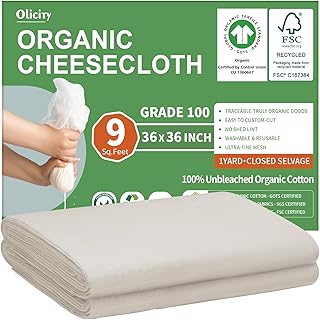
True to its name, cheese making is the classic use. It's perfect for draining whey from curds when making ricotta, paneer, or farmer's cheese. A high-quality, reusable cloth like the Organic GOTS Certified Cheese Cloth is ideal, as its fine mesh and closed edges prevent loss and are gentle on delicate curds.
2. Straining and Clarifying
From straining homemade nut milks and yogurt to clarifying stocks, broths, and even cocktails, cheesecloth is unmatched. For heavy-duty straining tasks, the Cotton Farm Grade 100 XL Cheese Cloth offers a large 36x36 inch size and a hemmed edge for durability, making it a reusable workhorse.
3. Cooking and Baking
It's a secret weapon for cooking turkey or chicken—wrap herbs and aromatics in a bundle to infuse flavor into your brine or roasting pan without leaving bits behind. It's also excellent for bundling spices for pickling or making bouquet garni. For these smaller, frequent tasks, a convenient multi-pack like the 6-Pack Beige Cheesecloth is perfect.
4. Juicing and Pressing
For extracting every last drop of juice from pulpy fruits or vegetables, a sturdy juicing cheesecloth is essential. The fine mesh ensures clear, pulp-free juice.
5. Crafts and DIY Projects
Beyond the kitchen, unbleached cheesecloth is a popular crafts fabric. It's used for ghost decorations, costume making, faux aging projects, and even as a natural fabric for eco-friendly gift wrapping or sachets.
How to Choose the Best Cheesecloth: Key Features to Consider
Not all cheesecloths are created equal. Here’s what to look for:
Material: Always opt for 100% cotton. It's food-safe, absorbent, and breathable. Choose unbleached for a more natural product free from chemical residues, or bleached for a brighter white appearance, like the GoodCook Everyday Cotton Cheesecloth.
Grade: For fine straining, Grade 100 is non-negotiable. For bundling herbs or less precise tasks, a lower grade may suffice.
Edges: Hemmed or closed edges prevent fraying and make the cloth much more durable and reusable. Products like the 12Pcs Reusable Cheese Cloths with Hemmed 4 Edges are built to last through many washes.
Size and Pack Count: Consider your needs. Large, single pieces (36x36 inches) are great for big batches. Precut, multi-pack sizes (like 20x20 or 15x15 inches) offer convenience and value for everyday use, such as the handy 4-Pack Precut Cheesecloth.
Certifications: For the utmost in purity, especially for organic foods, look for certifications like GOTS (Global Organic Textile Standard), as found on the organic cheese cloths.
Caring for Your Cheesecloth: Make It Last
One of the best features of modern cheesecloth is its reusability. To care for yours, simply rinse it immediately after use in cold water to remove food particles. Then, wash it in warm, soapy water or toss it in the washing machine (in a mesh bag for safety). Air dry or tumble dry on low. With proper care, a high-quality cloth like the High-Grade 100 Cheesecloth 6-Pack can be used dozens of times, making it an economical and eco-friendly choice.
Whether you're a seasoned artisan cheesemaker or just looking to up your kitchen game, having the right cheesecloth on hand opens up a world of culinary possibilities. From the robust MAJESTIC CHEF Natural Cheesecloth to the value-packed Mostdream 10-Pack, there's an option for every need and budget. For a comprehensive overview of all the types and uses, be sure to read our Ultimate Guide to Cheesecloth. Invest in a good quality, reusable cheesecloth today, and you'll wonder how you ever managed without it.